
Route of the Sun
Route of the Sun: Journey Through Peru’s Most Spectacular Scenic Highway
Imagine a road that unwinds like a golden ribbon through the heart of the Andes, where every curve reveals a new wonder—snow-capped peaks giving way to emerald valleys, ancient Inca ruins appearing like mirages in the highland mist, and crystalline lakes reflecting the endless Peruvian sky. This isn’t a dream; this is the Route of the Sun (Ruta del Sol), one of South America’s most breathtaking journeys and Peru’s best-kept travel secret.
Stretching approximately 390 kilometers between Cusco and Puno, this legendary route is far more than just a way to get from point A to point B. It’s a pilgrimage through time, culture, and nature—a full-day adventure that transforms an ordinary bus ride into an extraordinary odyssey you’ll remember forever.
The Journey of a Lifetime
Most travelers rush between Cusco and Puno in a standard bus, arriving six hours later with nothing but numb legs and a vague memory of mountains. But those who choose the Route of the Sun experience something entirely different: a carefully curated journey with strategic stops at archaeological sites, colonial churches, museums, and viewpoints that reveal the soul of the Peruvian highlands.
This isn’t just transportation—it’s storytelling on wheels, where the Andes themselves become your guide through 3,000 years of human history.
What Makes the Route of the Sun Special?
A Living Museum
The Route of the Sun connects two of Peru’s most important cities through a corridor rich in pre-Columbian and colonial heritage. Unlike flying or taking a direct bus, this journey lets you witness the dramatic transformation of landscapes and cultures as you climb from the Sacred Valley toward the vast, wind-swept altiplano where Lake Titicaca awaits.
You’ll travel through small Andean villages where time seems to move differently, where women in traditional pollera skirts herd alpacas across ancient pastures, and where Quechua remains the language of daily life. The journey ascends to La Raya Pass at 4,335 meters above sea level—one of the highest points accessible by road in Peru—before descending into the altiplano’s otherworldly landscapes.
The Unmissable Stops Along the Way
Andahuaylillas: The Sistine Chapel of the Americas
Your first stop is the charming village of Andahuaylillas, home to the stunning Church of San Pedro de Andahuaylillas. Don’t let the modest adobe exterior fool you—step inside and prepare to have your breath taken away. The interior explodes with baroque gold leaf, intricate murals covering every inch of wall and ceiling, colonial paintings, and an ornate altar that rivals anything in Rome.
Built in the 17th century by Jesuit missionaries, this church earned its nickname “Sistine Chapel of the Americas” for good reason. The ceiling frescos depict biblical scenes and Andean symbols in a fascinating cultural fusion. Spend time examining the details—angels with indigenous features, tropical birds hidden among European motifs, and Latin inscriptions in gold.
Pro tip: Photography inside is often restricted, so absorb the beauty with your eyes rather than your camera lens. This is a place to be present.
Raqchi: Temple of the Inca God Wiracocha
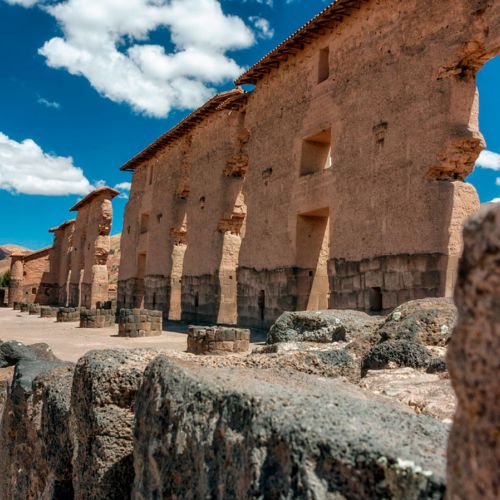
Next, you’ll arrive at the archaeological complex of Raqchi, one of the most impressive yet underrated Inca sites in Peru. The centerpiece is the massive Temple of Wiracocha, whose remaining central wall towers 12 meters high—imagine how magnificent it must have looked when complete!
This was once a major administrative and religious center along the Inca road network. Wander through the ruins of circular storehouses (colcas) where the Incas kept their agricultural surplus, explore residential areas, and stand beneath the monumental temple wall feeling utterly dwarfed by Inca engineering.
Unlike the crowds at Machu Picchu or Sacsayhuamán, Raqchi offers something precious: solitude. You might have entire sections to yourself, allowing for genuine contemplation and connection with this ancient place.
La Raya Pass: Top of the World
As the bus climbs higher and higher, the landscape transforms dramatically. Trees disappear, replaced by tawny grasslands dotted with grazing alpacas and llamas. Then you reach La Raya, the highest point of the journey at 4,335 meters above sea level.
Step off the bus into the thin, crisp air and take in the panorama: snow-capped mountains surround you in every direction, their peaks sharp against the impossibly blue sky. This is the watershed between two great drainage systems—one flowing to the Amazon, the other to Lake Titicaca.
Local vendors sell alpaca wool sweaters, hats, and handicrafts at remarkably good prices. It’s also a perfect photo opportunity, though the altitude might leave you breathless—literally. Take it slow, breathe deeply, and maybe buy a hot cup of coca tea to warm up.
Pukara: Museum of Lithic Art
The town of Pukara offers a fascinating stop at the Lithic Museum (Museo Lítico), showcasing stone sculptures and artifacts from the Pukara culture, which flourished here between 200 BCE and 300 CE—long before the Incas.
The museum houses impressive monoliths, including the famous Pukara bulls (toritos de Pukara), ceramic bulls that have become symbols of protection and good fortune throughout the Andes. You’ll see these colorful ceramic bulls on rooftops across Peru—they originated right here.
The collection includes intricate stone carvings of deities, warriors, and animals that reveal the artistic sophistication of this ancient culture. It’s a reminder that the Andes have been home to advanced civilizations for millennia.
Lunch with a View
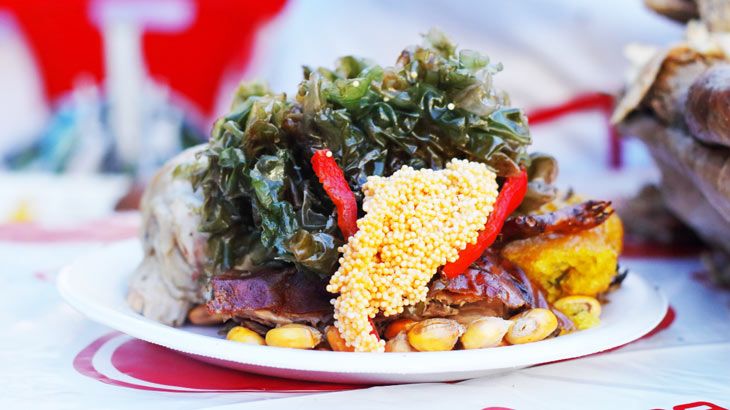
Around midday, you’ll stop at a countryside restaurant for a buffet lunch featuring traditional highland cuisine. Expect quinoa soup, roasted alpaca or chicken, potatoes prepared various ways, fresh salads, and perhaps a local specialty like rocoto relleno.
These lunch stops aren’t just about food—they’re about the experience. Many restaurants offer stunning views of the surrounding mountains and valleys. Some include live traditional music or dance performances. It’s a chance to relax, chat with fellow travelers, and mentally process the morning’s adventures before continuing.
The Changing Landscapes: A Visual Symphony
One of the Route of the Sun’s greatest gifts is the constantly evolving scenery. You begin in Cusco’s temperate valley, surrounded by eucalyptus groves and agricultural terraces. As you climb, you enter the puna—high-altitude grasslands where the air is thin and the horizon seems endless.
Watch for herds of alpacas and llamas grazing peacefully, their silhouettes perfect against distant mountains. Spot traditional stone houses with thatched roofs, their walls built using techniques unchanged for centuries. Notice how the light changes as clouds cast shadows that race across the valleys, creating a dynamic painting that’s never the same twice.
Near La Raya, the landscape becomes almost lunar—stark, beautiful, and humbling. Then, as you descend toward Puno, you enter the altiplano proper, a vast high plateau where the sky seems to stretch forever and Lake Titicaca shimmers on the horizon like a mirage.
Essential Recommendations for Travelers
Choose the Right Tour Company
Not all Route of the Sun tours are created equal. Research companies carefully and read recent reviews. The best operators provide:
- Bilingual guides (Spanish and English) who are knowledgeable and engaging
- Comfortable buses with heating, restrooms, and reclining seats
- Adequate time at each stop (not rushed)
- Quality lunch included in the price
- Small group sizes for a more personalized experience
Recommended companies include Inka Express, Wonder Peru, and Peru Hop. Expect to pay $30-60 USD per person—significantly more than a direct bus but worth every penny for the experience.
Prepare for Altitude
You’ll reach over 4,300 meters, which can affect anyone regardless of fitness level. To minimize altitude sickness:
- Spend at least 2-3 days in Cusco before the journey to acclimatize
- Drink coca tea the morning of departure and during the trip
- Stay hydrated with water throughout the day
- Avoid alcohol the night before
- Eat lightly before and during the journey
- Bring altitude sickness medication like Diamox if you’re prone to symptoms
- Move slowly when walking around at stops, especially La Raya
Symptoms like headache, nausea, or dizziness are common at high altitude. If they become severe, alert your guide immediately.
Dress in Layers
The temperature varies dramatically throughout the day and at different altitudes:
- Early morning in Cusco: Cool (10-15°C/50-59°F)
- La Raya Pass: Cold and windy (0-5°C/32-41°F)
- Afternoon arrival in Puno: Cool to mild (10-18°C/50-64°F)
Bring:
- Warm jacket or fleece
- Hat and gloves for La Raya
- Scarf or buff
- Sunglasses (UV protection essential at altitude)
- Sunscreen (the sun is intense at high elevation)
- Comfortable walking shoes
The layering strategy is key—you’ll want to add and remove clothing throughout the day.
Pack Smart
Bring a small daypack with:
- Water bottle (1-2 liters)
- Snacks (nuts, chocolate, fruit, crackers)
- Camera with charged batteries and memory cards
- Cash in small bills (soles) for souvenirs and tips
- Motion sickness medication if you’re prone to car sickness
- Toilet paper and hand sanitizer (restroom facilities vary)
- Any personal medications
- Notebook or journal for reflections
Start Early, Finish Late
Most Route of the Sun tours depart Cusco around 7:00-8:00 AM and arrive in Puno around 5:00-6:00 PM. It’s a long day—roughly 10-11 hours total. Make sure you:
- Get a good night’s sleep beforehand
- Eat a light breakfast before departure
- Use the restroom before boarding (though the bus has one)
- Charge your devices the night before
Respect Sacred and Cultural Sites
Remember that these are not just tourist attractions—they’re sacred spaces and living heritage:
- Follow your guide’s instructions at archaeological sites
- Don’t touch ancient walls, carvings, or artifacts
- Be respectful inside churches (remove hats, speak quietly)
- Ask permission before photographing local people
- Purchase something from local vendors if you photograph their goods
- Stay on marked paths at ruins
- Don’t litter—pack out everything you bring in
Engage with Your Guide
Your guide is a treasure trove of knowledge about history, culture, archaeology, and local life. Ask questions! Most guides love sharing deeper insights beyond the standard script. Curious about Inca agricultural techniques? The role of coca leaves in Andean culture? How modern communities maintain their traditions? Ask away.
Good questions lead to fascinating conversations and a richer understanding of what you’re experiencing.
Consider the Direction
Most travelers go Cusco to Puno (heading toward Lake Titicaca), but you can also do the reverse. The Cusco-to-Puno direction is more popular because:
- You gradually ascend in altitude, which is easier on your body
- It flows naturally for travelers doing the typical Cusco → Puno → Bolivia route
- The light is better for photography in this direction
However, Puno to Cusco works perfectly well if it fits your itinerary better.
Don’t Rush in Puno
If possible, spend at least two nights in Puno after arriving via the Route of the Sun. You’ll be tired, and you’ll want time to:
- Explore Puno’s main plaza and pedestrian streets
- Visit the Uros Floating Islands and Taquile Island on Lake Titicaca
- Try local specialties like trucha (trout) and quinoa soup
- Visit the Sillustani burial towers if interested
- Acclimatize before continuing to Bolivia or returning to lower altitude
Book in Advance During High Season
From May to September (Peru’s dry season and high tourist season), Route of the Sun tours can sell out, especially during holidays and festivals. Book at least 1-2 weeks ahead online or through your hotel/hostel in Cusco.
During low season (November-March), you’ll have more flexibility, though rain is more likely.
Bring Entertainment for Quiet Stretches
While much of the journey involves stops and stunning scenery, there are stretches of driving through less varied landscape. Bring:
- Music or podcasts downloaded to your phone
- A good book
- Journal for writing
- Downloaded maps to follow your progress
Many travelers also enjoy simply gazing out the window, meditating, or chatting with fellow passengers.
Stay Flexible and Patient
This is South America, and things don’t always run on exact schedules:
- Buses might leave a few minutes late
- Stops might be slightly shorter or longer than planned
- Weather can change rapidly
- Traffic or road conditions might cause delays
Embrace the flow rather than stressing about perfect timing. The journey is the destination.
Why Choose the Route of the Sun?
In our age of fast travel and direct flights, the Route of the Sun offers something increasingly rare: the luxury of slow travel, of witnessing the gradual transformation of landscape and culture, of earning your arrival rather than simply appearing.
This journey reminds us that the space between destinations can be just as meaningful as the destinations themselves. Every kilometer traveled is a story, every stop a chapter in the grand narrative of the Andes.
You’ll arrive in Puno not just 390 kilometers from where you started, but transformed by what you’ve seen, learned, and felt. The archaeological sites will expand your understanding of Andean civilization. The churches will reveal the complex cultural fusion of colonization. The landscapes will humble you with their raw beauty. The local people you encounter will remind you that these aren’t museum pieces but living cultures.
The Sun’s Path Calls You
The Route of the Sun isn’t just a bus ride—it’s a pilgrimage, an education, and an adventure rolled into one unforgettable day. It’s standing at 4,335 meters gasping in the thin air while surrounded by eternal mountains. It’s running your fingers along Inca stonework and marveling at engineering that has lasted 500 years. It’s tasting quinoa soup made from grain grown in these very fields for thousands of years.
It’s watching the sun paint the Andes in shades of gold, amber, and crimson as you roll across the roof of South America. It’s the smile of an Andean woman selling handicrafts at La Raya. It’s the weight of history pressing against your chest inside Andahuaylillas’ golden church. It’s arriving in Puno exhausted but exhilarated, your mind full of images and your heart full of wonder.
So when you’re planning your Peru adventure, resist the temptation to simply fly between Cusco and Puno or take the direct overnight bus. Give yourself the gift of the Route of the Sun. Travel slowly, look deeply, ask questions, and let the journey unfold at the pace the Andes intend.